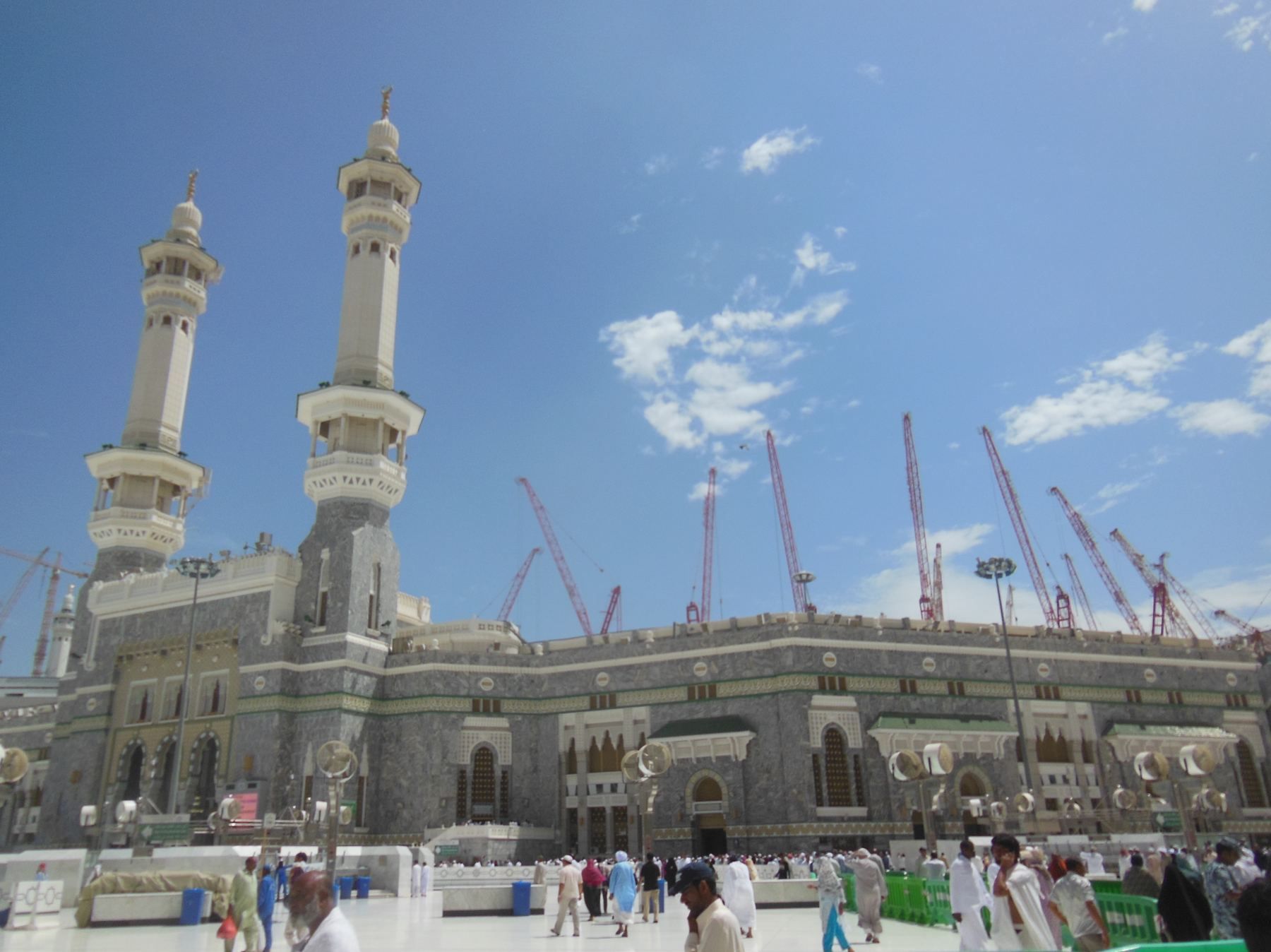
Umrah in short: the 5 steps
Umrah has five steps in a fixed order: enter ihram at the miqat, perform tawaf (seven circuits of the Ka'bah), perform sa'i (seven trips between Safa and Marwah), then tahallul — trimming or shaving the hair to close the rites. The sections below walk through each step with its du'a.
Who Can Perform Umrah: The Basic Requirements
Before ihram, four requirements determine whether Umrah is obligatory and valid for you: being Muslim, having reached puberty (baligh), being of sound mind (aqil), and having the means (istita'ah) — financially able to afford the trip without hardship to dependents, and physically able to perform the rites. A person missing one of these (a child, for example) can still perform Umrah; it simply isn't obligatory on them yet, and a guardian usually performs the rites on a young child's behalf.
One extra condition applies specifically to women: a woman should not travel for Hajj or Umrah without a mahram (a husband or a permanently unmarriageable male relative) or, per some scholars, a trustworthy group of women — based on the Prophet ﷺ's instruction "A woman should not travel [on a journey] except with a mahram" (Sahih al-Bukhari 1862, Sahih Muslim 1339). Most Malaysian agencies and MOTAC-registered packages already build mahram or trusted-group travel into their arrangements — check this before booking rather than after.
If you're unsure whether you personally meet these conditions, ask your agency's religious officer or a local mufti's office rather than deciding alone.
1. Enter the state of Ihram
Before reaching the miqat (the boundary where ihram becomes obligatory), make ghusl, wear the two white garments (men) or modest clothing (women), and make your intention for Umrah. Then begin the talbiyah:
لَبَّيْكَ اللَّهُمَّ لَبَّيْكَ، لَبَّيْكَ لَا شَرِيكَ لَكَ لَبَّيْكَ…
"Labbayk Allahumma labbayk, labbayk la sharika laka labbayk…"
From this point, avoid what is forbidden in ihram — cutting hair or nails, perfume, arguing, and intimacy.
2. Arrive at Masjid al‑Haram
Enter with your right foot and the du'a for entering the mosque. Keep your group close — the crowds near the mataf are dense, especially after prayers. Agree on a meeting point that actually works before you go in.
3. Perform Tawaf
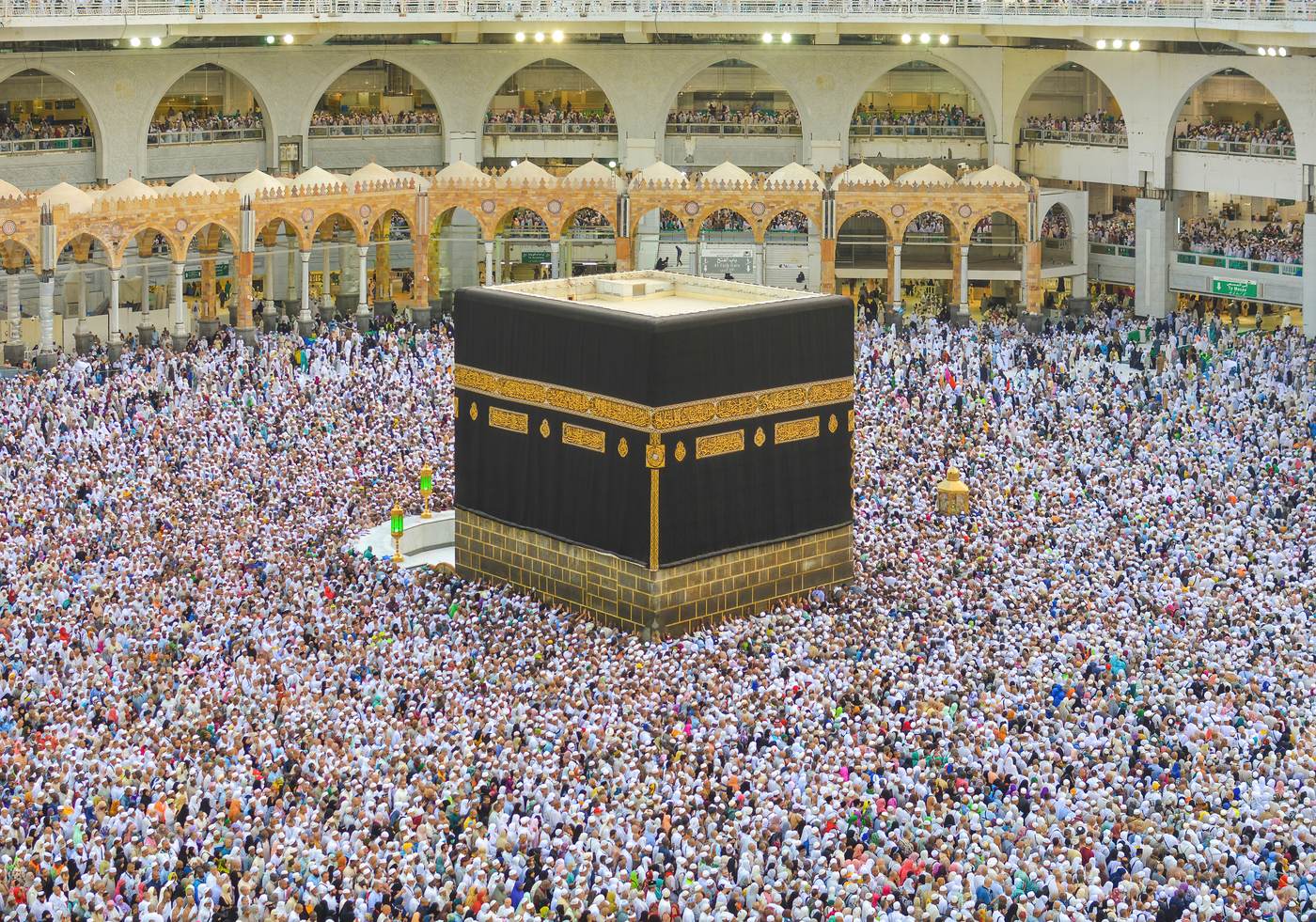
Make seven circuits of the Ka'bah anti‑clockwise, starting and ending at the Black Stone (al‑Hajar al‑Aswad). Men do raml (a brisk pace) in the first three circuits. There is no single fixed du'a — supplicate freely; between the Yemeni corner and the Black Stone, many say:
رَبَّنَا آتِنَا فِي الدُّنْيَا حَسَنَةً وَفِي الْآخِرَةِ حَسَنَةً وَقِنَا عَذَابَ النَّارِ
"Rabbana atina fid‑dunya hasanah…"
After tawaf, pray two rak'ahs behind Maqam Ibrahim if you can, and drink Zamzam.
4. Perform Sa'i between Safa and Marwah
Walk seven times between the hills of Safa and Marwah, beginning at Safa. Men jog the green‑lit section. Make du'a at each hill. This honours Hajar's search for water for her son Isma'il.
5. Tahallul — trim or shave
Men shave (preferred) or trim the hair; women trim a fingertip's length. With this, your Umrah is complete and the restrictions of ihram are lifted. Alhamdulillah.
If Your Period Starts During Umrah
It's common, and it doesn't derail your Umrah. If your period starts before or during your visit to Makkah, you stay in ihram and continue everything else as normal — du'a, dhikr, waiting with your group — but you hold off on tawaf itself, since purity is a condition for it. This isn't a modern accommodation: it's exactly what happened to Aisha (RA) on her own pilgrimage, and the Prophet ﷺ told her, "Do what all the pilgrims do, except do not perform tawaf of the House until you are pure" (Sahih al-Bukhari 305, Sahih Muslim 1211). Once your period ends, make ghusl, then complete tawaf, sa'i and tahallul in the normal order — nothing is missed, only delayed. The majority of scholars treat the wait as a firm condition, though a small number allow narrow necessity exceptions (an unavoidable, non-extendable flight home, for example) together with an expiation — that's worth raising directly with a scholar or your agency's religious officer, not deciding alone. If you'd rather sidestep the timing question altogether, it's permissible to take medication to delay your period for the trip, with a doctor's advice first (Malaysia's Federal Territory Mufti's Office confirms this in Al-Kafi #478) — many pilgrims do exactly this.
Doing Umrah as a group? Wasl keeps everyone on a live map around the Haram, helps you find a separated member fast, and shares meeting points — so no one gets lost in the crowd. Free on iOS & Android.
A few first‑timer tips
- Memorise your hotel name and a nearby landmark — streets look identical at night.
- Hydrate constantly and carry a small Zamzam bottle; the heat is deceptive — see our heat & hydration safety guide for a full timing and warning-signs breakdown.
- Keep elderly members between two people during tawaf and sa'i.
- Agree on a clear meeting spot and time before every visit to the Haram — see our crowd-safety guide for the full checklist and what to do if someone gets separated.
- The habits you build for this trip don't have to end with it — our guide to everyday deen habits covers keeping prayer and Quran consistent once you're home.
Frequently asked questions
What are the steps of Umrah, in order?
Umrah has five steps in a fixed order: enter ihram at the miqat, perform tawaf (seven circuits of the Ka'bah), perform sa'i (seven trips between Safa and Marwah), then tahallul — trimming or shaving the hair to close the rites.
Do I need a mahram to perform Umrah as a woman?
Per most scholars, yes — a woman should not travel for Umrah without a mahram (a husband or a permanently unmarriageable male relative) or, per some scholars, a trustworthy group of women, based on the Prophet ﷺ's instruction in Sahih al-Bukhari 1862 and Sahih Muslim 1339. Most Malaysian agencies and MOTAC-registered packages already build this into their arrangements — confirm it before booking.
What happens if my period starts during Umrah?
You stay in ihram and continue everything else as normal, but hold off on tawaf itself since purity is a condition for it — this is exactly what happened to Aisha (RA), and the Prophet ﷺ told her to do everything the other pilgrims do except tawaf until she was pure (Sahih al-Bukhari 305, Sahih Muslim 1211). Once your period ends, make ghusl, then complete tawaf, sa'i and tahallul in the normal order.
How many times do I walk between Safa and Marwah during sa'i?
Seven times, starting at Safa, making du'a at each hill — this honours Hajar's search for water for her son Isma'il.