Why it happens so easily
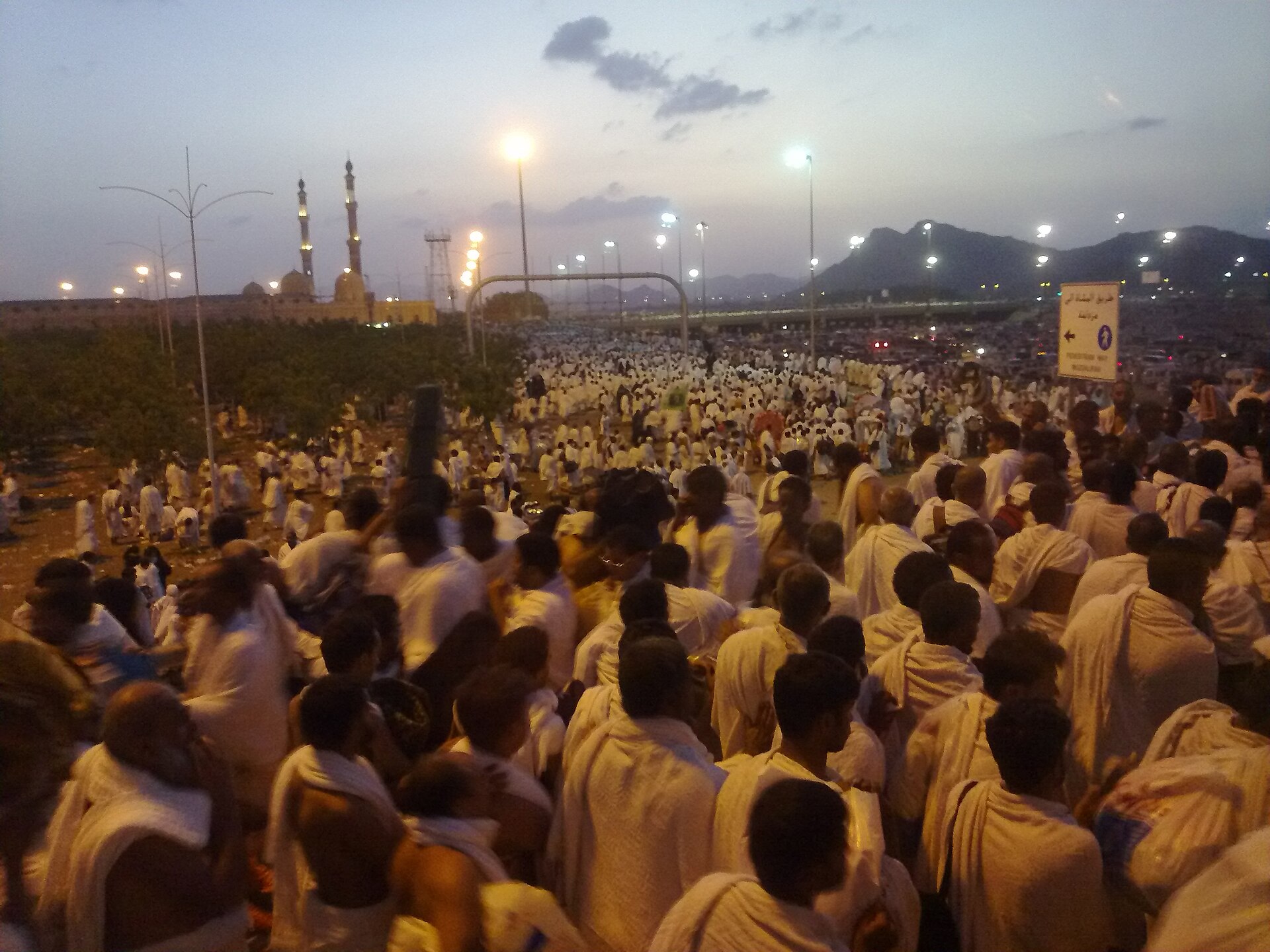
Masjid al-Haram and Masjid an-Nabawi draw some of the densest, most sustained crowds of any religious sites on earth, and the density spikes hard around each prayer time as people converge from every direction at once. Add the heat (see our heat & hydration safety guide — dehydration and heat exhaustion are two of the quieter reasons someone drifts off without meaning to), the fatigue of jet lag and long days on your feet, and the fact that first-timers are often navigating an unfamiliar layout of gates, levels and corridors — and it's easy to see how a group can drift apart without anyone noticing for a few minutes. Phones don't always help either: mobile networks strain under the load of hundreds of thousands of devices in close proximity, and continuous GPS use plus the region's heat can drain a battery faster than most people expect.
Before you go: agree on the basics as a group
- Pick a fixed, easy-to-describe meeting point outside the mataf — a specific gate or clock tower entrance — and repeat it before every visit, not just once at the start of the trip.
- Make sure every member, including children and the less tech-savvy, has memorised the hotel's name and one landmark near it. Streets look identical at night and under crowd lighting.
- Assign one "point person" per family or room who does a quick headcount at agreed intervals — entering the Haram, after prayer, before leaving.
- Write your group leader's number somewhere that doesn't rely on a working phone — a wristband, or a card tucked in a pocket or bag.
- Agree a simple rule in advance: if you're separated, stay where you are (or head straight to the meeting point) rather than wandering to find each other — two people moving through a moving crowd almost never find one another by chance.
- Keep phones useful: one small power bank per family, screenshots of the hotel card and meeting point saved offline, and at least two members with a working local SIM or eSIM — mobile networks around the Haram slow down exactly when you need them most.
Pick a meeting point that actually works
Not every meeting point is equal. "Near the Kaaba" fails immediately — the mataf is the densest, most fluid part of the entire mosque, and nobody can stand still in it. A good meeting point sits outside the flow of the crowd, is easy to say over a borrowed phone, and impossible to mistake:
- The gates of Masjid al-Haram are numbered as well as named — agree on one specific gate on the side facing your hotel (for example, King Abdul Aziz Gate), and use its number, not just "the main gate".
- The Makkah clock tower is visible from almost everywhere around the mosque. It makes a poor meeting point — everyone else standing under it had the same idea — but it's a reliable compass for getting your bearings after leaving by the wrong gate.
- In Masjid an-Nabawi, use a numbered gate the same way — numbers survive stress and language barriers better than names do.
- Agree how long to wait: a common rule is thirty minutes at the meeting point, then head back to the hotel. The hotel is the one meeting point that is always valid.
Staying visible during tawaf and sa'i
Crowd density near the mataf is tightest right after prayers, so enter as a tight group rather than trickling in separately. Keep the slowest or eldest member on the inside, away from the faster-moving outer rings of tawaf, and agree on which gate you'll exit through rather than trying to spot one another mid-circuit. For young children or elderly members, matching lanyards, bright wristbands, or even the same colour cap make it far easier to keep track of someone at a glance in a sea of white ihram and dark abayas.
Travelling as a group? Wasl keeps everyone visible on one live map around the Haram and sends a drift alert the moment someone strays too far, while Lost Pilgrim Recovery lets anyone nearby lend their phone to find a separated member in seconds — no data connection or account needed. Free on iOS & Android.
If someone goes missing, in order
- Stay calm and stay put — or head straight to your agreed meeting point. Don't wander looking for each other; it's the single biggest reason separations drag on longer than they need to.
- Find a working phone — your own if it still has signal, or borrow one nearby. Even without your own SIM working, a working device is usually all that's needed if your group already has a live-location tool in place.
- Ask Haram security or an information point — uniformed staff and information counters are stationed throughout both mosques specifically for moments like this, and they deal with separated pilgrims constantly during peak season.
- Do a headcount before assuming the worst — have your point person confirm exactly who's missing. Often it's one person running a few minutes late to the meeting point, not a genuine emergency.
If you're the one who's lost
Most advice is written for the people searching. Being the one who's lost feels worse — and the same plan works from the other side:
- Stop. Step out of the moving crowd first — to a wall, a pillar, anywhere the current can't carry you — and only then think.
- Get your bearings from the clock tower in Makkah, or the minarets and courtyard in Madinah, then head for the agreed meeting point — not back through the crowd the way you came.
- If you can't find the meeting point, any security officer or information counter will help — a separated pilgrim is the most routine thing they handle all day. Show them your hotel card.
- One phone number written on a card beats ten memorised ones. Stress erases memory; paper doesn't.
Extra care for elderly members, children and first-timers
- Keep elderly members between two people, not at the front or back of the group, during tawaf and sa'i.
- For children, a simple wristband or card with the hotel name and group leader's number (with country code) is worth more than a memorised phone number they may forget under stress.
- First-timers should walk the route from hotel to Haram once in daylight before attempting it after Isha, when crowds and darkness make landmarks much harder to read. If you haven't done Umrah before, our step-by-step guide covers the whole journey, ritual by ritual.
None of this removes the crowds — nothing can. But a group that has agreed on a meeting point, a point person and a simple "stay put" rule turns a stressful few minutes into a minor inconvenience, almost every time.
Frequently asked questions
What's the first thing to do if I get separated from my group?
Stay where you are, or head straight to the meeting point you agreed on before entering the Haram. Don't wander looking for each other — in a crowd this size, two people moving independently almost never find one another by chance.
Where should we agree to meet if we get separated?
Pick a fixed, easy-to-describe spot outside the mataf — a specific gate or a landmark like a clock tower entrance — and agree on it before every visit, not just once at the start of the trip.
Who can I ask for help if I still can't find my group?
Haram security staff and information counters are stationed throughout both mosques specifically for this. They handle separated pilgrims constantly during peak season, so don't hesitate to approach them.
How do we keep track of children or elderly parents in the crowd?
Keep them positioned between two people rather than at the front or back of the group during tawaf and sa'i, and give children a simple wristband or card with the hotel name and group leader's number — easier to rely on under stress than a memorised phone number.