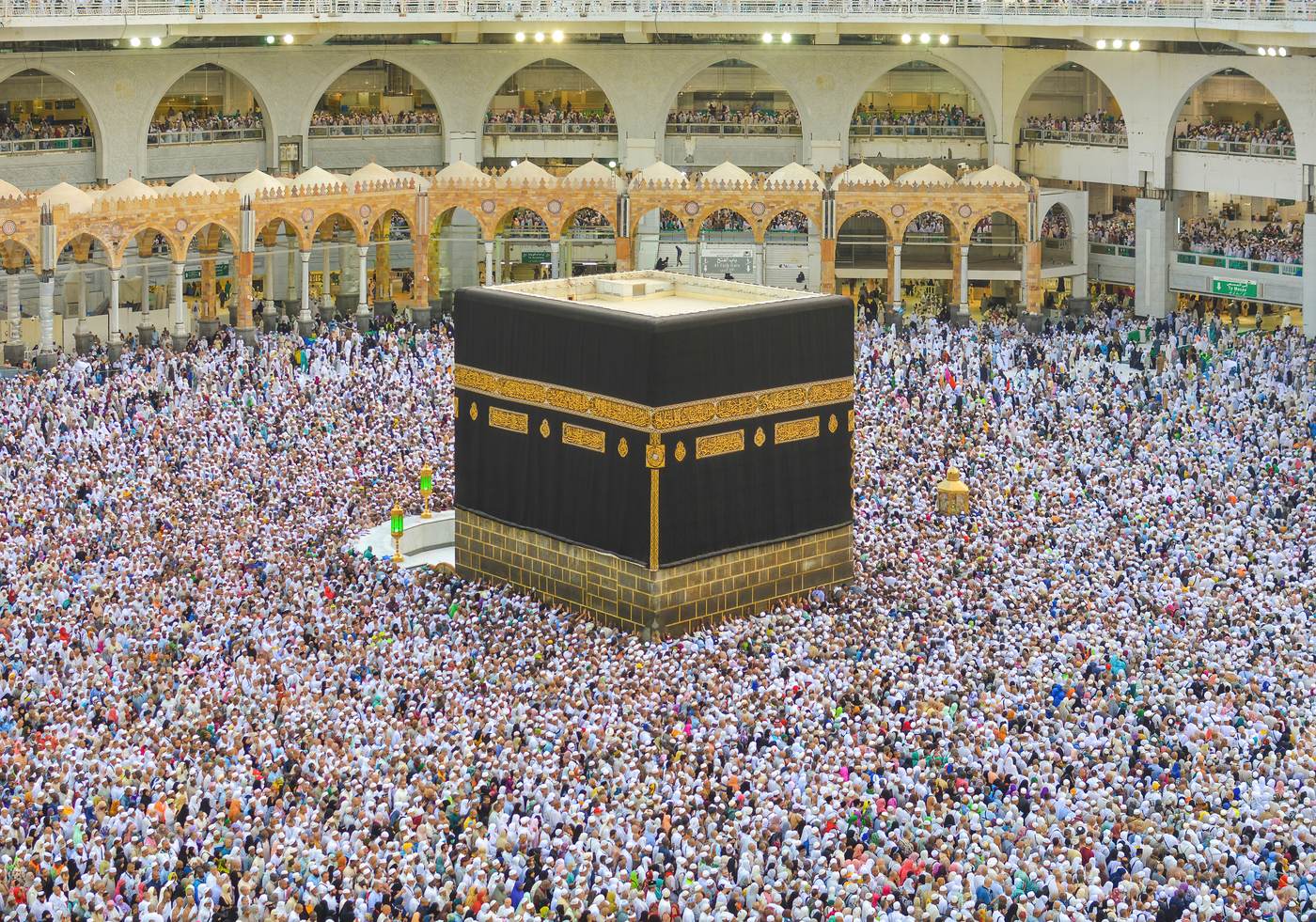
Why the heat catches Malaysian pilgrims off guard
Kuala Lumpur's humidity keeps sweat sitting on your skin, so you feel hot and see the evidence of it. Makkah's dry heat does the opposite — sweat evaporates almost instantly, so you can be losing a serious amount of fluid while feeling deceptively comfortable. Add the extra walking around the Haram, the layers of ihram or modest clothing, and the fatigue of jet lag, and dehydration builds quietly rather than announcing itself. It's one of the most common — and most preventable — things that sends pilgrims to a first-aid point.
Hydrate before you're thirsty, not after
- Sip constantly rather than gulping occasionally. Small amounts every 15–20 minutes keep you ahead of fluid loss far better than one large bottle drunk in a rush.
- Zamzam is available throughout the Haram — carry a small refillable bottle and top it up rather than relying on finding a dispenser exactly when you need one.
- Replace what sweat takes with it, not just water. Long hours in the heat wash out salts as well as fluid — an oral rehydration sachet or a banana can help if you're feeling drained rather than just thirsty.
- Go easy on caffeine before long periods outdoors — it's a mild diuretic and works against you on a hot day.
Time your rituals around the sun, not against it
The hour or two either side of Dhuhr is when the sun is most direct and the mataf area is hottest. Where your schedule allows, plan tawaf and sa'i for early morning or after Isha, when temperatures drop noticeably and the crowds are often thinner too. If a midday visit is unavoidable, build in short shaded pauses rather than pushing straight through seven circuits without a break.
Dress and gear for the conditions
- Light, breathable fabric — cotton or moisture-wicking material lets sweat actually cool you instead of trapping heat against your skin.
- Comfortable, sturdy-soled sandals or shoes — the marble and paved areas around the Haram can get hot enough underfoot to matter, especially at midday.
- A small umbrella or wide-brimmed cap for the walk between your hotel and the Haram, where there's less shade than inside the mosque complex itself.
- A facial mist spray or damp cloth — a quick way to cool down that elderly members in particular tend to find genuinely helpful.
Heat exhaustion doesn't just feel unpleasant — it's also one of the quieter reasons someone can become disoriented and drift from their group without meaning to. Wasl's live group tracking keeps everyone visible on one map so a moment of dizziness doesn't turn into a longer search, and Lost Pilgrim Recovery helps anyone nearby find a separated member fast — no data connection needed. Free on iOS & Android.
Know the warning signs — and what to do
Heat exhaustion often starts subtly: heavy sweating, tiredness that feels heavier than normal jet lag, mild dizziness, a headache, or muscle cramps. If you or someone with you notices these signs, don't push through the rest of the ritual first — move to shade immediately, sip water slowly, loosen any tight clothing, and cool the skin with a damp cloth on the neck and wrists. If symptoms don't ease within 20–30 minutes, or if confusion, vomiting, or a very rapid heartbeat appears, get to one of the first-aid points stationed around both mosques — staff there are equipped and experienced with exactly this.
Extra care for elderly members, children and first-timers
- Check in on elderly members more often than feels necessary — thirst signals weaken with age, so they may not mention feeling unwell until it's more advanced.
- Children dehydrate faster than adults relative to their size — offer water on a schedule rather than waiting for them to ask. Travelling with young children? Our Umrah with kids guide covers packing, timing and crowd safety for the whole family.
- If it's your first Umrah, our step-by-step guide covers the whole journey so you can plan hydration breaks around the ritual sequence rather than improvising mid-tawaf.
- Agree on a meeting point before you go in — our crowd-safety guide covers exactly what to do if the heat, or anything else, separates your group.
None of this requires special equipment or a big change of plans — just a bottle you refill often, a schedule that respects the midday sun, and a group that keeps an eye on each other. Handled that way, the heat becomes a minor planning detail rather than the thing you remember most about the trip.